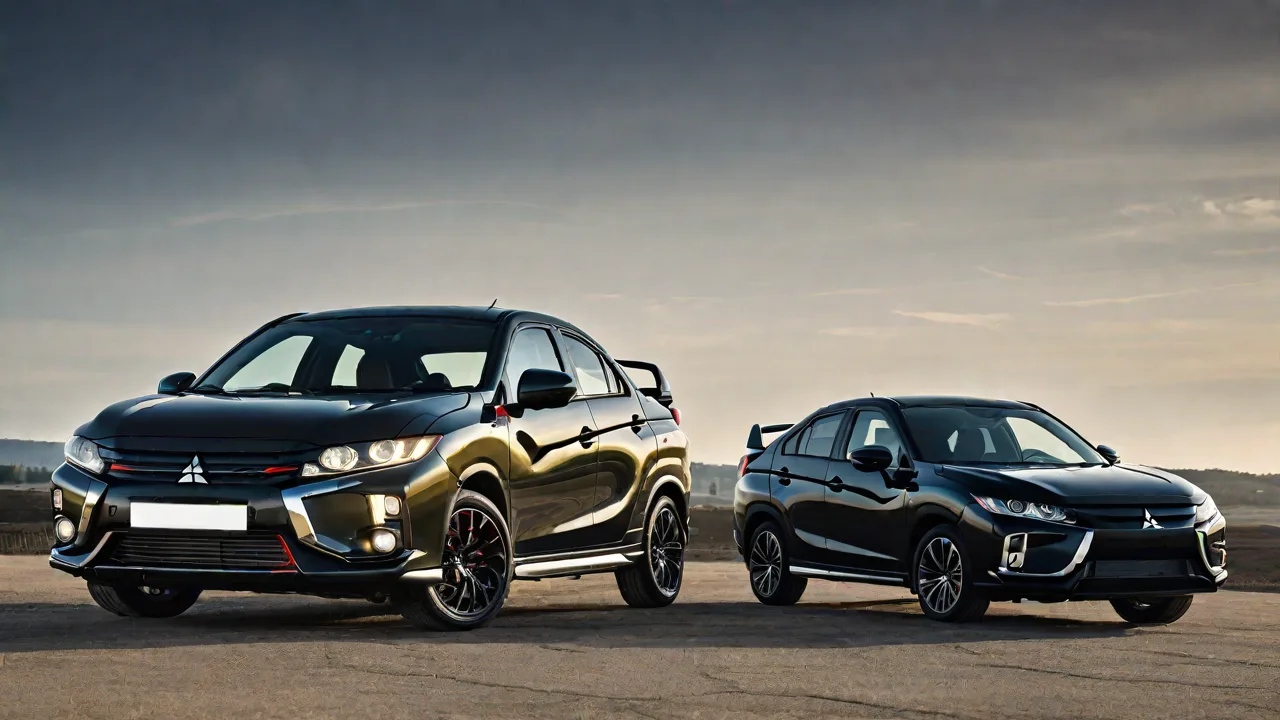
Everyday Mitsubishi’s Expert Comparison: Lancer Evolution vs. Eclipse Cross for Performance Enthusiasts
Mitsubishi has long been recognized for producing vehicles that blend innovative engineering with dynamic performance. Among its lineup, two models stand out for performance enthusiasts seeking distinct driving experiences: the legendary Lancer Evolution and the contemporary Eclipse Cross. Though they cater to different segments, both vehicles showcase Mitsubishi’s commitment to turbocharged powertrains and advanced all-wheel-drive technologies, making them attractive options for drivers who value both excitement and capability. This expert comparison dives deep into the nuances of these two models, exploring their engine options, handling characteristics, design philosophies, and overall performance appeal.
Engine Options and Performance Specifications
Lancer Evolution: The Sports Sedan Powerhouse
The Mitsubishi Lancer Evolution, often affectionately called the “Evo” by enthusiasts, is a performance icon that traces its roots back to rally racing. Central to its reputation is a potent turbocharged 2.0-liter inline-4 engine, known for delivering exhilarating power and torque. Depending on the specific generation and variant, the Lancer Evolution’s engine outputs roughly between 276 to 303 horsepower and approximately 274 lb-ft of torque, which is remarkable for a compact sedan.
This high-output engine is paired with a sophisticated 5-speed manual transmission (with some models offering a 6-speed manual in later generations) or a 6-speed Twin-Clutch Sportronic Shift Transmission (TC-SST) automated manual transmission, allowing drivers to extract maximum performance whether on the track or the street. The turbocharged inline-4 features a robust intercooler system to maintain optimal boost pressure and engine temperatures during spirited driving.
Eclipse Cross: Turbocharged Efficiency Meets Versatility
The Mitsubishi Eclipse Cross occupies the compact crossover SUV segment, designed to meet modern demands for versatility without compromising too much on spirited driving. Under its hood lies a 1.5-liter turbocharged inline-4 engine, delivering around 152 horsepower and 184 lb-ft of torque. While not as powerful as the Lancer Evolution’s engine, the Eclipse Cross’s powertrain balances fuel efficiency and sufficient performance for everyday driving scenarios.
The Eclipse Cross typically comes equipped with a continuously variable transmission (CVT), which enhances fuel economy and provides smooth acceleration. Additionally, the vehicle offers an optional Super All-Wheel Control (S-AWC) system, which enhances traction and stability, especially in adverse weather conditions or on challenging road surfaces. The S-AWC integrates active yaw control, active stability control, and an electronically controlled limited-slip differential, technologies derived from Mitsubishi’s motorsport experience.
Advanced Drivetrain Technologies
Lancer Evolution’s All-Wheel-Drive System
The Lancer Evolution’s handling prowess is largely attributed to its sophisticated Active Center Differential (ACD) and Active Yaw Control (AYC) systems. The ACD dynamically adjusts the torque split between the front and rear wheels, adapting to road conditions and driving inputs to maximize traction. Meanwhile, the AYC distributes torque between the left and right rear wheels, enhancing cornering agility and stability by reducing understeer and oversteer tendencies.
Combined with a sport-tuned suspension, Brembo high-performance brakes, and a lightweight chassis, the Evo delivers razor-sharp handling that has made it a favorite among rally racers and driving purists alike.
Eclipse Cross’s Super All-Wheel Control
The Eclipse Cross’s Super All-Wheel Control (S-AWC) system, while less aggressive than the Evo’s setup, greatly enhances the vehicle’s capability. S-AWC monitors and adjusts power delivery and braking force to individual wheels, improving grip and control on slippery surfaces. This makes the Eclipse Cross well-suited to drivers who face diverse driving environments, from urban streets to snowy roads.
The suspension system in the Eclipse Cross is tuned more for comfort and everyday usability, prioritizing a smooth ride over track-focused sharpness. This balance ensures the crossover remains accessible to a broad range of drivers while still offering confident handling.
Driving Experience and Performance Dynamics
Lancer Evolution: Precision and Aggression
Behind the wheel of the Lancer Evolution, drivers experience a focused and intense connection to the road. The turbocharged engine provides immediate throttle response, and the all-wheel-drive system ensures exceptional grip during high-speed cornering and acceleration. The Evo’s manual transmission option is particularly beloved, offering tactile feedback and control that engage driving enthusiasts.
The chassis is rigid and responsive, allowing the car to carve through corners with precision. The suspension setup, while stiff, is designed to absorb uneven surfaces without compromising control. Drivers often praise the Evo’s ability to maintain composure under heavy braking and rapid directional changes, making it ideal for track days, spirited canyon runs, and rally-style driving.
Eclipse Cross: Comfortable and Confident
In contrast, the Eclipse Cross delivers a more relaxed yet confident driving experience. Its turbocharged engine provides enough power for quick highway merges and urban maneuvering, while the CVT ensures smooth power delivery. Although it lacks the sharpness of a dedicated sports sedan, the Eclipse Cross remains engaging thanks to its turbocharged powertrain and all-wheel-drive capabilities.
The crossover’s higher ride height imparts a commanding view of the road, and its suspension absorbs bumps and rough pavement with ease. Steering is light and responsive, suited for everyday driving rather than aggressive cornering. This makes the Eclipse Cross a great choice for drivers who want a practical vehicle with a bit of pep.
Design and Interior Comfort
Lancer Evolution’s Sporty and Driver-Focused Cabin
The Lancer Evolution’s interior is designed with the enthusiast in mind. It features bolstered sport seats that provide support during aggressive driving, a minimalist dashboard layout focused on essential controls, and performance-oriented instrumentation including a boost gauge and lap timer in some models. Materials are functional, with durable cloth or optional leather upholstery, emphasizing utility over luxury.
While the Evo’s cabin is tight, it fosters a connected driving environment. Controls are ergonomically placed for quick access, and visibility is optimized for precise vehicle placement. However, rear passenger space and cargo capacity are limited, reflecting the car’s sports sedan focus.
Eclipse Cross’s Modern and Practical Interior
The Eclipse Cross’s interior contrasts sharply with the Evo’s driver-centric design. It offers a spacious cabin with seating for five, featuring supportive but comfortable seats designed for long journeys. The dashboard is modern, with a touchscreen infotainment system that includes smartphone integration, navigation, and a suite of driver-assistance technologies.
Practicality is a highlight, with ample rear legroom and a flexible cargo area that can be expanded by folding down the rear seats. The crossover’s higher roofline and upright seating position enhance passenger comfort and ingress/egress convenience. Soft-touch materials and available premium trims give the Eclipse Cross a refined feel suitable for families and commuters alike.
Safety and Technology
Both the Lancer Evolution and Eclipse Cross come equipped with a range of safety features, though their focus differs due to their respective market positions.
- Lancer Evolution: Emphasizes stability and traction control systems designed to keep the vehicle planted during high-performance driving. Some models include advanced braking systems and airbags, but modern driver-assistance features are limited due to the Evo’s production era.
- Eclipse Cross: Incorporates contemporary safety technologies such as forward collision mitigation, lane departure warning, adaptive cruise control, and a multi-view camera system. These features enhance everyday driving safety and convenience.
Fuel Economy and Practical Considerations
Given its performance orientation, the Lancer Evolution’s fuel economy is understandably modest, with EPA ratings generally in the range of 17-19 mpg city and 23-25 mpg highway depending on the year and transmission. Enthusiasts often accept this tradeoff for the driving thrills the Evo provides.
The Eclipse Cross, designed for efficiency and versatility, achieves significantly better fuel economy figures, typically around 26 mpg city and 29 mpg highway. Its smaller turbocharged engine and CVT contribute to these numbers, making it a more economical choice for daily commuting and long trips.
Pricing and Market Availability
The Lancer Evolution ceased production in 2015, making it a sought-after used performance car. Prices vary widely based on condition, mileage, and generation, but the Evo remains a valuable collector’s vehicle among enthusiasts. Maintenance and parts may require specialized attention due to the car’s performance focus and age.
The Eclipse Cross is currently in production and available new through Mitsubishi dealerships. Its pricing is competitive within the compact crossover segment, offering a solid value proposition for buyers seeking a combination of style, practicality, and turbocharged performance.
Summary: Choosing Between the Lancer Evolution and Eclipse Cross
Both the Mitsubishi Lancer Evolution and Eclipse Cross showcase the brand’s turbocharged engineering and all-wheel-drive expertise, yet they cater to very different audiences:
- Lancer Evolution: Ideal for drivers seeking a high-performance sports sedan with aggressive handling, track capability, and a connected driving experience. It is best suited for enthusiasts who prioritize speed, precision, and legacy over everyday practicality.
- Eclipse Cross: Perfect for individuals or families needing a versatile compact crossover with turbocharged power, modern technology, and advanced safety features. It balances spirited driving with comfort, cargo space, and fuel efficiency.
Ultimately, the choice depends on your lifestyle and driving preferences. If you crave adrenaline-inducing performance and rally-inspired handling, the Lancer Evolution remains an iconic option. Conversely, if you desire an adaptable vehicle capable of handling daily errands, weekend adventures, and occasional spirited drives, the Eclipse Cross presents a compelling package.
For enthusiasts seeking a performance Mitsubishi today, the Eclipse Cross offers a taste of turbocharged excitement wrapped in a practical crossover. For those who want a purebred sports sedan experience, hunting down a well-maintained Lancer Evolution is a rewarding endeavor that delivers unmatched driving thrills.